
I Never Wanted to Build a Career. I Wanted to Build a Life I Controlled.
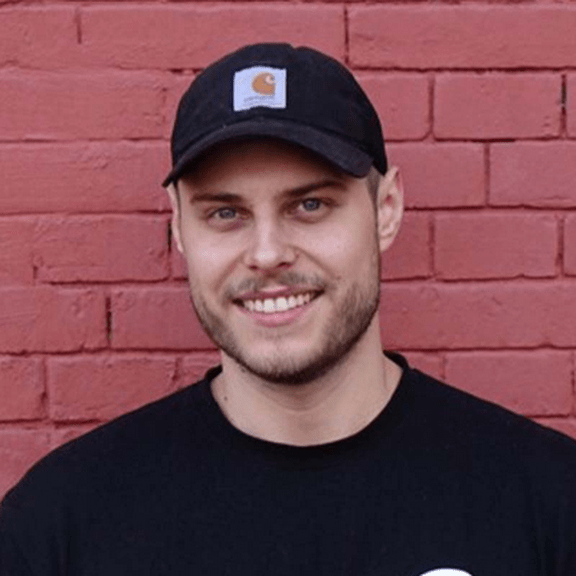
I grew up in Germany, and for a long time I followed a path that looked relatively normal from the outside. I studied, worked in media and journalism, moved deeper into digital marketing, worked with companies and agencies, and kept progressing through what most people would consider a conventional career.
The problem was that conventional employment never felt particularly conventional to me.
I have always had a difficult relationship with environments where doing something a certain way mattered more than finding the best way to do it. I questioned processes. I became frustrated with unnecessary bureaucracy. I wanted to move faster than organizations often allowed. If I saw a better way of solving something, it was incredibly difficult for me to simply ignore it because “this is how we have always done it.”
For years, I interpreted some of that as a weakness.
Eventually, I started understanding it very differently.
I have ADHD, and looking back, a lot of my professional life makes much more sense through that lens. My brain is constantly connecting ideas, identifying opportunities, looking for shortcuts, building systems and asking what could be improved. When I am genuinely interested in something, I can disappear into it for hours. When something feels pointless, repetitive or unnecessarily restrictive, forcing myself through it can feel disproportionately difficult.
Those characteristics do not always fit neatly into traditional employment.
They fit entrepreneurship remarkably well.
Being Different Became More Useful When I Stopped Fighting It
There is an interesting thing that happens when you spend enough time trying to fit yourself into environments that were not designed around how you naturally operate. You start assuming you are the problem.
Maybe you need to become more patient. Maybe you need to stop questioning things. Maybe you need to become better at switching your brain off at five o’clock. Maybe you need to become more comfortable doing work simply because somebody above you decided it should be done. I tried versions of that for years.
What I eventually realized was that the characteristics creating friction in one environment could become strengths in another. An entrepreneur is supposed to notice opportunities other people miss. You are supposed to question existing ways of doing things. You are supposed to move quickly, solve problems with incomplete information and become almost irrationally interested in making something work.
The same brain that can struggle with repetitive corporate processes can become incredibly useful when there is a business problem in front of it. That does not mean ADHD automatically makes somebody a good entrepreneur. Entrepreneurship has plenty of its own challenges for a neurodivergent brain. Too many ideas can destroy focus. Hyperfocus can make the rest of life disappear. Administrative work still exists. The freedom to choose what you work on also means nobody is standing behind you making sure you finish the boring parts.
But for me, learning to build around the way my brain actually works has been far more productive than spending my life trying to make it work like somebody else’s.
And if you have spent years feeling slightly out of place in traditional employment because you think differently, question everything and constantly feel the urge to build something of your own, I think that feeling is worth listening to.
Maybe the goal is not becoming better at fitting into the box.
Maybe you need to build your own.
“Maybe being built different is not the problem. Maybe it is where we should start.”
Built Different, Felix Kirsch
From Journalism to Marketing
Before entrepreneurship became the center of my life, my career started much closer to media.
I worked in journalism and content, including work connected to publications and companies in Germany and internationally. That background still influences how I approach marketing today because journalism teaches you something incredibly valuable: understand the audience first.
What does somebody actually care about? What are they trying to understand? Why should they keep reading? What makes information credible? What turns a complicated subject into something another human being can understand?
Those questions eventually led me deeper into digital marketing and SEO.
Search fascinated me because it sits directly between human behaviour and business. Somebody has a problem. They express that problem through a search. Businesses compete for the opportunity to become the answer.
SEO was never particularly interesting to me as a collection of technical tricks. What interested me was the commercial system underneath it.
Why does one business dominate a market while another remains invisible? Why does one website consistently create customers while another receives traffic that produces nothing? How can content become an asset? How can visibility compound? How can a small company compete with organizations that have substantially larger marketing budgets?
Those questions eventually became the foundation of my professional expertise.

The Agency Was Supposed to Be a Side Business
Van Isle SEO did not begin with some grand plan to build an agency. It started as the kind of thing many businesses start as: something on the side.
I was working professionally in SEO and digital marketing while gradually taking on my own projects. Initially, the idea was simply to create additional income, have more control over the kind of work I accepted and see what happened. Then it started working.
One client became another. Referrals arrived. Retainers accumulated. The revenue became meaningful enough that the side business stopped feeling like a side business. Within less than a year, Van Isle SEO went from something I was building alongside employment to becoming the business I wanted to bet on.
That transition changed a lot for me. Leaving the perceived security of employment is uncomfortable, particularly when other people depend on you. A salary is predictable. Entrepreneurship is not. Clients can leave. Revenue changes. You are responsible for finding the next opportunity.
But there is another kind of risk that receives much less attention: spending years building somebody else’s asset while knowing you ultimately want to build your own.
For me, that eventually became the bigger risk.
Financial Freedom Changed What I Wanted From Business
I did not leave employment because I wanted to work less. At least initially, entrepreneurship often means working more. What I wanted was ownership.
If I was going to spend an enormous amount of time solving business problems, building systems, creating strategies and generating revenue, I wanted some of that effort to create something I actually owned.
That is where my interest in financial freedom became deeply connected to entrepreneurship.
I am influenced by writers such as Robert Kiyosaki, particularly the idea that there is a fundamental difference between earning income and building assets. A high income can improve your life, but if your entire financial existence depends on continuing to perform the same work every month, you are still dependent on active income.
That realization changed the way I started looking at Van Isle SEO.
I did not simply want a profitable freelance operation where I exchanged my personal expertise for money. I wanted to create systems. Delegate delivery. Build processes other people could operate. Use technology and AI to remove repetitive work. Build recurring revenue. Create products. Invest the profits into assets outside the agency.
The goal became bigger than building an SEO company.
The goal became building freedom-producing assets.
I Don’t Want to Own a Job
There is a stage many entrepreneurs reach where the business is objectively successful but personally exhausting. Revenue grows, but so does the workload. More clients require more delivery. More employees require more management. Every new opportunity creates another responsibility.
At that point, the owner can accidentally become the most overworked employee inside their own company. That possibility fascinates me because it gets to the heart of what I believe entrepreneurship should eventually become.
I do not want to simply create a job with my own name on the company. I want businesses that can function without requiring my presence in every process. I want systems that turn expertise into repeatable outcomes. I want technology to handle work that does not require human creativity. I want people to have clear ownership over areas of the company rather than constantly waiting for my approval.
Most importantly, I want my time gradually concentrated around the things where I actually create disproportionate value: thinking, creating, communicating, finding opportunities and deciding what to build next. Everything else should eventually become a system.
Why Marketing, Business, Wealth and Life Belong Together
This website covers several subjects that might initially look unrelated. Marketing. AI. Entrepreneurship. Business systems. Investing. Passive income. ADHD. Family. Work-life balance. Financial freedom. To me, they are parts of the same conversation.
Marketing creates opportunity.
If you can understand attention, demand, sales and customer acquisition, you have one of the most powerful skills available to an entrepreneur. It gives you the ability to create revenue rather than simply wait for it.
Business turns opportunity into an asset.
Once something works, you need systems, people, processes, software and automation so that growth does not require endlessly increasing your own workload.
Wealth turns business success into independence.
The income a business creates can be reinvested into additional businesses, financial assets and other income-producing systems. Over time, the objective is reducing your dependence on any single source of active income.
And then there is life, which is the entire reason I care about the other three.
Family Made Freedom More Concrete
Freedom sounds abstract when you are younger.
Then life changes. You have a family. Other people depend on you. Time starts feeling different because you can see it passing in a way you perhaps did not notice before.
Suddenly the idea of spending the next thirty years waiting for weekends, annual vacations and eventually retirement feels less attractive. At the same time, entrepreneurship becomes more serious because risk no longer affects only you. That tension has influenced the kind of life I am trying to build.
I want financial security, but I also want time. I want ambitious businesses, but I do not want my daughter growing up with a father who was technically providing for the family while mentally living inside his laptop.
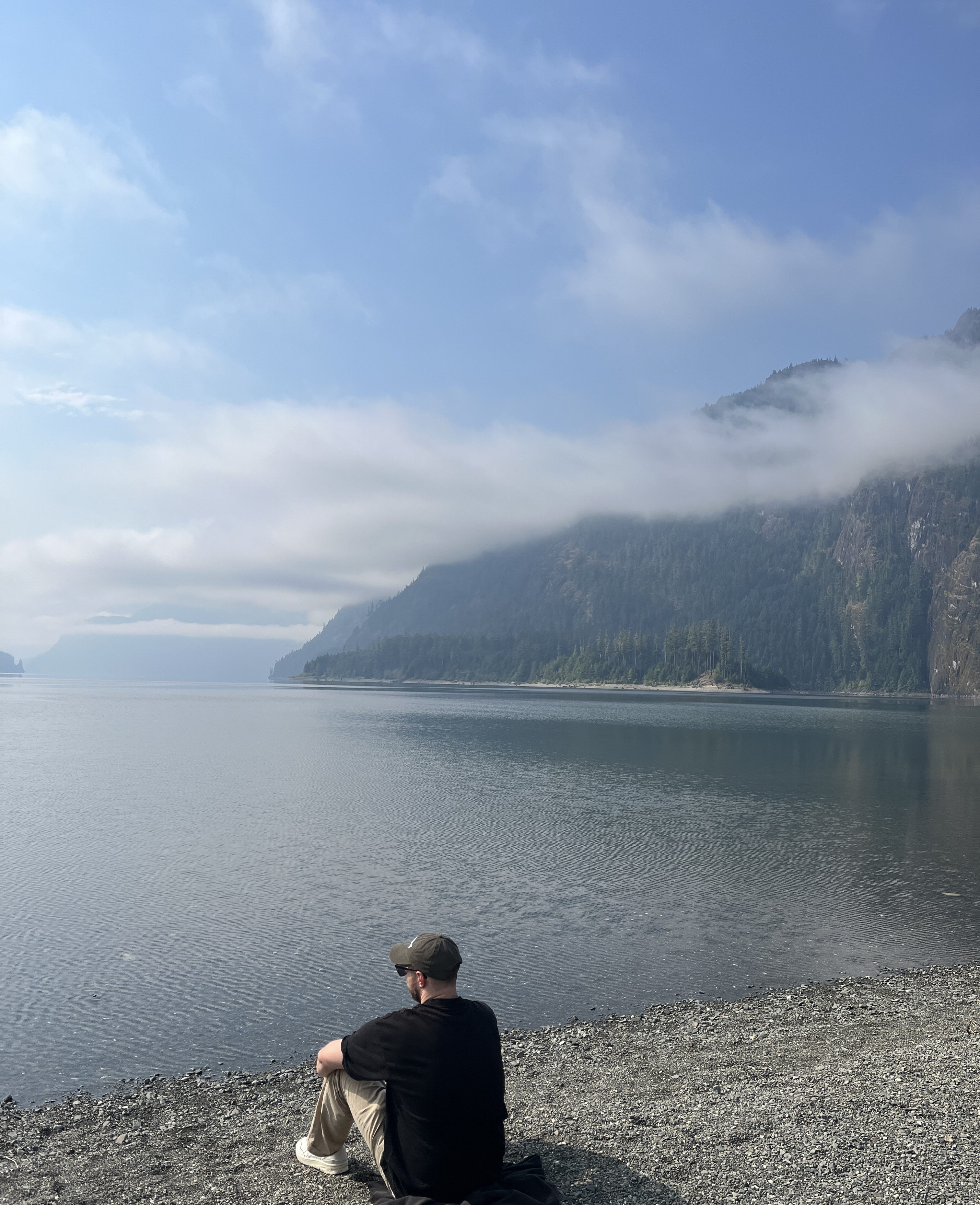
I want the ability to travel, spend meaningful time in Canada and Germany, work on projects that excite me and occasionally change direction simply because life is too short to optimize every decision around the safest possible outcome.
That is what financial freedom means to me.
Not doing nothing.
Having choices.
Entrepreneurship Is Also a Mental Game
Entrepreneurship can be psychologically intense. The highs are high, but setbacks can quickly feel personal when you own the business. I have had to learn that being capable of working constantly does not mean I should. Health, family, mindset and spirituality are part of learning how to manage ambition, not separate from it.
I Am Still Building This
I am not writing from some imaginary finish line. I am still building businesses, experimenting with AI, learning to delegate, investing and deciding what I am willing to sacrifice for growth. This platform exists to document that process honestly, including the ideas that fail and the opinions that change.
What I Know Something About
My professional expertise is primarily in marketing and business growth: SEO, content, organic and local search, AI search, AEO, customer acquisition and growth strategy. Running businesses has pushed me deeper into pricing, recurring revenue, automation, delegation, systems and asset building. I share professional expertise where I have it and personal experience where I am still learning.
If You Have Never Quite Fit the Traditional Path
Some people spend too much of their lives trying to suppress the characteristics that could become strengths in the right environment. I am not saying everyone should become an entrepreneur, but if you constantly think differently, the answer may not be learning to think like everyone else.
Find the environment where thinking differently becomes useful. For me, that environment was business.
What I’m Trying to Build
I want to build businesses and assets that create financial independence without sacrificing the people and experiences I am building that independence for. I want to become exceptionally good at marketing, AI and business growth, build companies that do not depend entirely on me, turn income into assets and share what I learn.
That is what this website is about: building skills that create income, businesses that create assets, and assets that create freedom. Then actually using that freedom to live.
Work With Me
If something here resonates with where you are right now, there are several ways we can work together.
I consult directly with entrepreneurs and business owners around marketing, growth, AI, systems and business strategy. I also speak to organizations and entrepreneurial audiences about many of the ideas I write about here.
For companies that want the marketing execution handled rather than advised on, my agency Van Isle SEO works across SEO, AI search visibility, AEO, content, local search and digital PR.
Or you can simply keep reading. I publish what I am learning across Marketing, Business, Wealth and Life, including the things that work, the things that don’t and the systems I am building along the way.


 Felix Kirsch